

The Call of the High Peaks
Himalaya is not just a mountain; it’s an emotion. It’s where the heart goes quiet and the soul talks loud. You come here and everything changes. The sky looks big, the wind is cold, and every breath reminds us how small we are. In Nepal, four peaks shine bright for those who love to climb and walk—Pikey Peak, Mera Peak, Island Peak, and Lobuche Peak. Each got its own story, its own smell, and its own path. Together, they show the four faces of Himalaya.
The Spirit of Adventure
Climbing in Nepal is not just about reaching the top. It is about feeling; it is about the journey. You walk through forests and villages, cross rivers, and see monks chant and children wave. Each step gives a story. Sometimes you feel strong, sometimes you are tired, but mountains always give you a reason to smile again. These four peaks show beauty and test courage too. You don’t need to be a hero, just have a heart full of dreams.
Pikey Peak: The Hill of Many Views
Pikey Peak Trek is not the tallest, but oh, the view. Sir Edmund Hillary said it was his favorite. You stand on top, and you see Everest shining, glowing like God’s light. The trail goes through Sherpa villages, rhododendron forests, and small prayer flags everywhere.
You wake early on a cold morning and watch the sun rise slowly. The sky turns orange, and the peaks turn gold. You feel peace deep inside. Pikey is not a hard climb, but it gives a big reward. You can do it in a few days, and it’s good for those who want to be close to the Himalaya but not too high.
The Charm of Pikey Peak Climbing
Pikey Peak climbs are simple but so pure. Local tea houses give warm food and smiling faces. You meet yak herders, monks, and old grandmothers telling stories of past snow. The trail is sometimes steep, sometimes gentle. It’s a perfect mix. The best time comes in spring or autumn, when the sky is clear and flowers bloom. You carry a small bag, a camera, and a big heart. Pikey teaches patience and joy in small things.
Mera Peak: The Big White Dream
Then comes Mera Peak, the tallest of the trekking peaks in Nepal, near 6,476 meters high. It’s a big mountain with a kind heart. It looks hard, but if you go slow and steady, it lets you come. You walk through Hinku Valley, wild and empty, where the sound of wind is your only friend.
The Mera Peak climb feels like a dream. Snow underfoot, ice axe in hand, you climb toward the sun. You reach high camp and see stars above, thousands of them, shining like fireflies in the black sky. Then summit day comes, and you start before dawn, slow step, slow breath. And when you stand on top, you see the world from heaven—Everest, Makalu, and Kanchenjunga, all in line. You cry maybe, not from pain but from joy.
Mera Peak Climbing Experience
Mera Peak Climbing is not very technical, but you need a guide, rope, crampons, and a harness. Safety is always first. You must train and prepare your body and mind. It takes around 14–18 days from Lukla and back. The altitude is a big challenge, so a slow walk is key. Mera makes you feel like you are part of the Himalaya, not just a visitor. When you come back, you are no longer the same person.
Island Peak: The Shining Jewel
Island Peak, also called Imja Tse, looks like an island in a sea of snow. That’s why names come. It is near the Everest region, and many climbers use it as a step before Everest. It’s more technical than Mera, but so beautiful you forget the hard.
The trek goes through the famous Everest trail—Namche Bazaar, Tengboche, and Dingboche. You walk with monks, yak bells sound, and Everest is watching you all the time. At base camp, you feel strong wind and deep silence. The Island Peak Climbing is steep near the top; you use rope, ladders, and ice tools. It’s an adventure of true spirit.
The Feel of Island Peak Climbing
Island Peak gives a mix of trek and real climb. You sleep in a tent at base camp, eat warm soup, and talk around the stove. At 2 AM you wake for the summit push. It is dark and cold, but your heart is hot with dreams. Slowly you go up, through an ice ridge, and when the sun rises, the sky explodes with colors. You look around and you see Ama Dablam, Lhotse, and Everest far away. You shout, maybe laugh, maybe cry. This mountain gives life new meaning.
Lobuche Peak: The Stone of Challenge
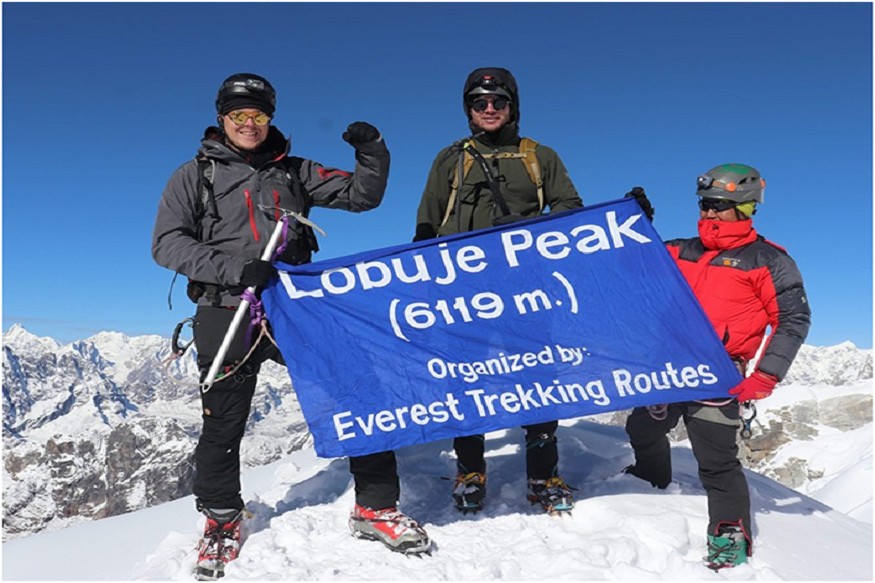
Lobuche Peak stands near Everest too, proud and rocky. It has two summits—Lobuche East and Lobuche West. Most climbers go east, around 6,119 meters high. It’s a technical one, but not impossible. You walk from Lukla through famous paths, cross suspension bridges, and pass through Sherpa villages.
Lobuche is a mountain with an attitude. It demands respect. It teaches discipline. The Lobuche Peak Climbing needs crampons, rope, and strong legs. But the reward—oh, it’s massive. From the top, you see Everest Base Camp below, glaciers like white rivers, and far mountains touching clouds.
The Challenge of Lobuche Peak Climbing
Lobuche climbs a little harder than Island and Mera. It has ice walls and narrow ridges. You must climb with a team, with a guide. But each moment on the mountain is a lesson. You learn to trust rope, trust people, and trust yourself. After the summit, you feel the power of the mountain inside your heart. It is not just a peak; it is a transformation.
Four Peaks, Four Souls
Each of these peaks—Pikey, Mera, Island, and Lobuche—shows a different mood of the Himalaya. Pikey gives peace. Mera gives a dream. Island gives courage. Lobuche gave me a challenge. Together, they make a full picture of mountain life.
In these trails, you see people smiling even when they have little. You see children running barefoot on cold mornings, happy. You hear the prayer wheel spin, and you smell juniper smoke from the monastery. The Himalaya is not just stone and snow; it is full of heart and humanity.
The Sherpa Culture and Mountain Spirit
Sherpa people live in high land; they are strong and gentle. They make tea, help trekkers, and climb mountains like walking on the ground. You feel safe when Sherpa is with you. They tell the story of mountain gods and old climbers who never return. Their respect for the mountain is deep. When you climb, you feel the same respect growing inside you.
Prayer flags flutter, bells ring, and the sky is so blue it hurts eyes. The mountain talks in silent language, and only the heart understands.
Preparation for These Climbs
All four peaks need good health and basic fitness. You do not need big muscles, just strong will. Learn to walk slowly, eat well, and drink water. Always listen to the guide. Altitude sickness is real, so go easy.
You need warm clothes, good boots, a down jacket, gloves, a hat, and sunglasses. For Mera, Island, and Lobuche, I need climbing gear too—harness, rope, crampon, and ice axe. But don’t worry, guides will help you with everything.
Best Time to Climb
The best seasons are spring (March–May) and autumn (September–November). The weather is stable, the sky is clear, and the mountain looks perfect. In winter it is cold and snow-heavy; in summer rain makes the path slippery. Choose the season and you get magic.
Why People Love These Climbs
Because these peaks are not just mountains, they are feelings. You come here, and you feel alive again. You forget city noise, phones, and busy life. You walk slowly, breathe deeply, and see far. You learn life is simple. Just food, walk, sleep, and smile.
Every climber says the same thing—when they go home, they miss the mountain. The silence, the stars, the sound of wind through prayer flags. Himalaya takes a small piece of your heart, and you never want it back.
Pikey for Peace, Mera for Majesty, Island for Spirit, Lobuche for Strength
Each peak has a purpose. Pikey for those who love views and culture. Mera is for those who want high but calm. Island for those who dream of adventure. Lobuche for those who want a test of skill.
You can climb one or all four, each giving a different taste. Some people start from Pikey and later go to Mera or Island. Some do Lobuche after the Everest Base Camp trek. It’s not about order; it’s about connection.
The Beauty Beyond the Climb
On these routes, you see rhododendron blooms, rivers sparkle, yaks graze, and old mani walls with carved prayers. You stay in a teahouse or camp, eat dal bhat, and talk with other travelers from all over the world. You share stories, laughs, pain, tea, and sky. That is the magic of mountains.
Sometimes it rains, sometimes it snows, sometimes you lose your way a little. But that’s okay. Mountains are never easy, and that’s why they are beautiful.
Coming Home from the Himalaya
When the climb finishes, when you go back to Lukla or Kathmandu, you feel light. You don’t need to say much. Your eyes tell a story. You look at the mountain once more and whisper, “Thank you.” You realize you climb not just a peak—you climb yourself.
You bring memories, photos, and maybe some blisters too. But also new peace. You understand what matters. And maybe you promise, one day, to come back again.
Final Thought: The Four Faces Forever
The Himalaya has many faces, but Pikey, Mera, Island, and Lobuche show the heart. They teach patience, courage, joy, and humility. Each path is different, but all lead to the same truth—mountains give more than they take.
So if you want to feel the world from the top, walk where the sky touches earth, then come. Come slow, come open. Let the Himalayas speak.
You don’t need perfect English or fancy words, just an honest heart. And when you stand up there, among the wind and snow, you will understand—this is life, this is freedom, this is the four faces of Himalaya.
Contact Details
Company address: Everest Trekking Routes Pvt. Ltd.
16 Khumbu, Nayabazaar, Kathmandu, Nepal
Mobile : +977-9843467921 (Rabin)
Email: [email protected]
URL:– www.everesttrekkingroutes.com