

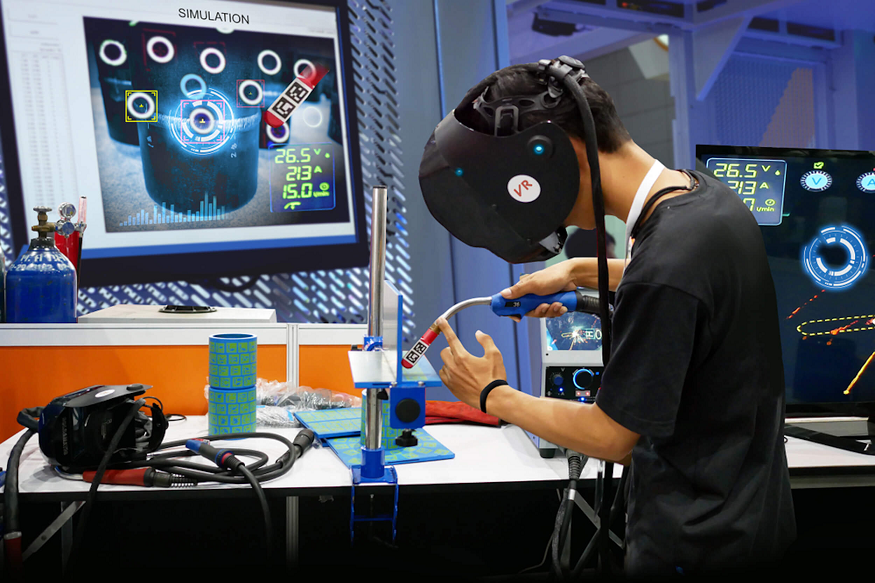
As law enforcement agencies confront an increasingly diverse range of challenges, right from active shooter incidents to large-scale emergencies, the demand for innovative and effective training methods continues to grow. Traditional training approaches, while still valuable, often struggle to fully recreate the complexity, unpredictability, and emotional intensity of real-world situations. To address these limitations, many departments are turning to immersive VR training systems, which provide highly realistic, interactive environments where officers can develop critical skills in a safe and controlled setting.
The Growing Importance of Immersive VR Training Systems in Public Safety Preparedness
Immersive VR training systems are renowned for their ability to create realistic and engaging simulations that closely mirror real-life law enforcement encounters. Unlike traditional classroom instruction or two-dimensional computer-based simulations, virtual reality places officers directly inside a three-dimensional environment where they can see, hear, and interact with people and situations as if they were occurring in the real world. This heightened sense of presence allows trainees to become fully engaged in the scenario, creating emotional and psychological responses similar to those experienced during actual field operations. These immersive VR training systems can replicate an extensive range of law enforcement situations. Officers can practice routine traffic stops, domestic disturbance calls, crowd-control operations, active shooter incidents, hostage negotiations, and emergency response scenarios. Because the simulations are designed to feel realistic, participants often experience elevated stress levels, forcing them to make decisions under pressure. This exposure helps officers become more comfortable operating in high-stakes environments while developing the confidence and composure needed to respond effectively during real emergencies.
Read More: The Importance and Practical Uses of a Group Scheduling Tool
For particularly challenging situations such as mass casualty events, terrorist attacks, or rapidly evolving public safety threats, immersive VR training systems offer a unique opportunity to build muscle memory and strengthen decision-making capabilities. Repeated exposure to stressful scenarios enables officers to practice critical procedures until they become second nature. Over time, this repetition enhances situational awareness, improves reaction times, and helps officers remain focused when confronted with similar circumstances in real life. The result is a workforce that is better prepared to manage crises while minimizing mistakes caused by stress or uncertainty.
Another major benefit of immersive VR training systems is their cost-effectiveness, flexibility, and scalability. Although implementing VR technology requires an initial investment in hardware, software, and licensing, many agencies find that these costs are offset by significant long-term savings. Traditional law enforcement training often requires expenditures for ammunition, training facilities, role-playing actors, travel arrangements, and equipment maintenance. Additionally, training videos and instructional materials frequently need updates to remain relevant as laws, procedures, and technologies evolve. Virtual reality reduces many of these recurring expenses by providing reusable digital environments that can be modified quickly and efficiently. Once a scenario is developed, it can be used repeatedly without the need for additional physical resources. Officers can participate in hundreds of training sessions across a wide variety of situations while maintaining consistent quality and realism.
The adaptability of VR training systems also makes them particularly valuable for law enforcement organizations of all sizes. Small departments with limited budgets can access sophisticated training experiences that would otherwise be difficult to afford, while larger agencies can deploy standardized programs across multiple locations.